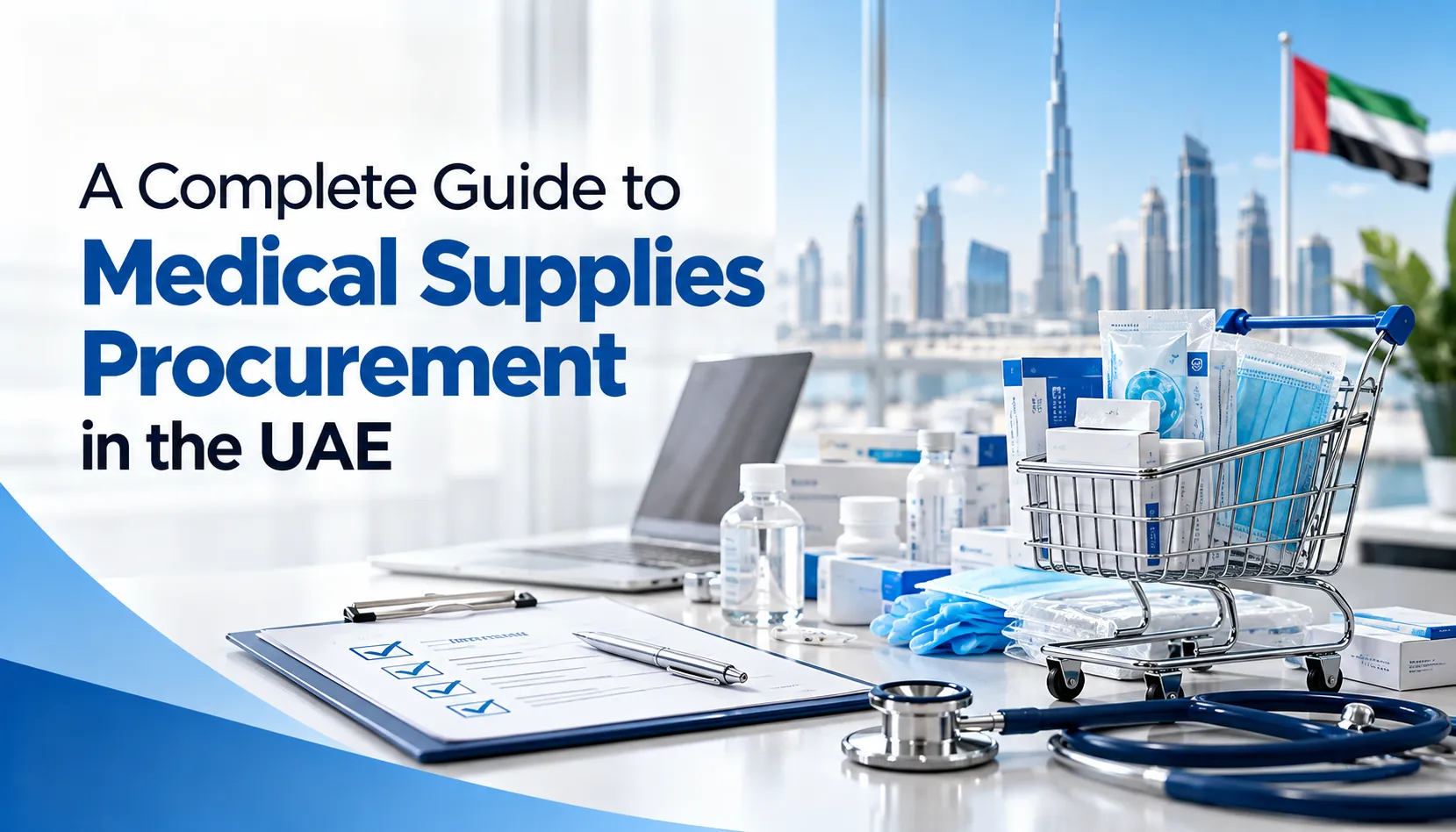
A Complete Guide to Medical Supplies Procurement in the UAE
Effective Medical Supplies Procurement in the UAE: A Guide for Healthcare Organisations
Effective procurement is essential for hospitals, clinics, laboratories and healthcare organisations across the United Arab Emirates. Selecting a reliable medical supplies supplier in the UAE helps purchasing teams manage product specifications, purchasing costs, stock availability and delivery requirements more efficiently.
Whether a facility needs routine medical disposables or specialised healthcare equipment, a structured procurement process supports better purchasing decisions.
Understanding Medical Supplies Procurement
Medical supplies procurement involves identifying requirements, evaluating suppliers, comparing quotations, verifying product documentation, placing orders and monitoring deliveries.
A clear procurement process can help healthcare organisations reduce avoidable delays and maintain better control over inventory.
1. Identify Your Healthcare Facility’s Requirements
Start by preparing a detailed list of required products. Include product names, specifications, sizes, quantities, packaging requirements and intended applications.
Typical procurement categories include:
- Nursing and medical consumables
- Infusion and IV supplies
- Wound care and surgical dressings
- Anaesthesia and respiratory consumables
- Diagnostic supplies
- General medical disposables
- Disinfectants and hygiene products
- Medical furniture and equipment
Clear specifications help suppliers provide quotations that can be compared accurately.
2. Evaluate Medical Supplies Suppliers in the UAE
When choosing a medical equipment or consumables supplier, assess more than the advertised price.
Consider product range, manufacturer information, relevant regulatory documentation, stock availability, delivery capabilities, quotation transparency and communication.
For regulated products, verify the applicable registration and authorisation requirements. The UAE Ministry of Health and Prevention provides an official registered medical product directory that can help users check listed products.
Requirements may differ depending on the product, its classification and the competent authority responsible for the relevant market or activity.
3. Compare Quotations Carefully
A useful supplier comparison should consider:
- Unit price and total order value
- Product specifications and manufacturer
- Quantity per box or carton
- Expiry dates and remaining shelf life, where applicable
- Delivery charges and estimated lead times
- Warranty or after-sales arrangements for equipment
- Availability of required documentation
Comparing equivalent products makes it easier to identify genuine value and avoid unexpected procurement costs.
4. Improve Inventory Planning
Poor inventory management can result in excess stock or shortages of essential supplies. Healthcare facilities can improve purchasing efficiency by monitoring consumption patterns, reviewing stock levels and establishing reorder points for frequently used products.
Products with expiry dates require appropriate stock rotation and monitoring. Storage conditions should follow the manufacturer’s instructions, especially for products with specific environmental requirements.
5. Plan for Delivery and Documentation
Before confirming an order, agree on delivery location, expected timeline, packaging requirements and the documents needed for receiving and inspecting the goods.
For imports or regulated medical products, verify the applicable UAE requirements before shipment. Do not assume that registration or approval in one country automatically satisfies requirements in another.
Why Work with Jaza Medical Supplies?
Jaza Medical Supplies supports the medical supply market in Oman, the UAE and the wider GCC. Its catalogue covers multiple healthcare product categories, including infusion supplies, wound care, diagnostic supplies, general consumables and medical furniture and equipment.
Healthcare procurement teams can explore the website’s product categories and contact Jaza to discuss their specific sourcing needs.
Frequently Asked Questions
1. How can I find a reliable medical supplies supplier in the UAE?
Compare suppliers based on product suitability, documentation, applicable regulatory compliance, stock availability, pricing, delivery arrangements and customer support.
2. What products can healthcare facilities purchase from medical suppliers?
Depending on the supplier’s catalogue, products may include medical disposables, gloves, masks, wound dressings, infusion sets, respiratory consumables, diagnostic products and medical equipment.
3. How can hospitals reduce medical procurement costs?
Use accurate demand forecasts, compare equivalent products, review total landed costs where relevant, monitor expiry dates and plan replenishment around actual consumption.
4. How do I check whether a medical product is registered in the UAE?
The UAE Ministry of Health and Prevention provides a registered medical product directory. Check the applicable official database and confirm any additional requirements with the relevant authority.
5. Can one supplier support medical procurement across the GCC?
A supplier may serve multiple GCC markets, but product availability, delivery arrangements and regulatory requirements must be confirmed for each destination.
Simplify Healthcare Procurement with the Right Supplier
A well-organised procurement process helps healthcare organisations source products with greater confidence. By prioritising product specifications, relevant documentation, supplier reliability and inventory planning, purchasing teams can make better-informed decisions.
Explore Jaza Medical Supplies for healthcare product categories serving the UAE, Oman and the wider GCC.